Canadian Price Variants: How to Spot a CPV
How to spot a Canadian price variant: the Marvel and DC CPV years, what the price box shows, and how to tell a CPV from a direct or dual-price copy.
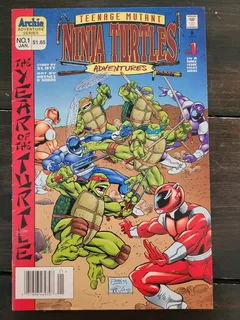
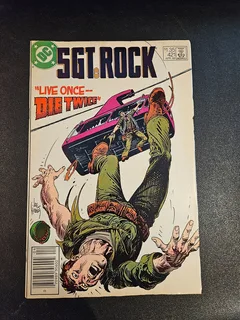
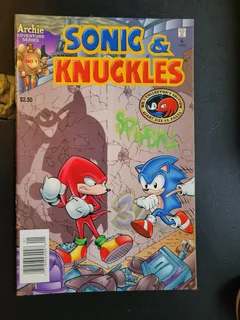
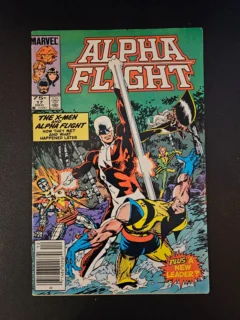
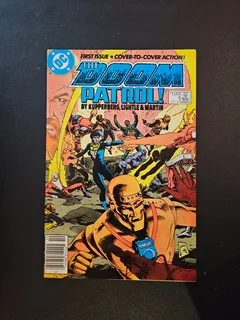
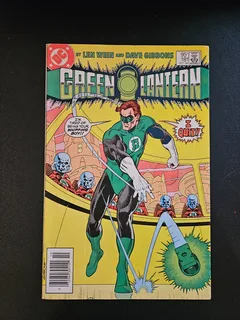
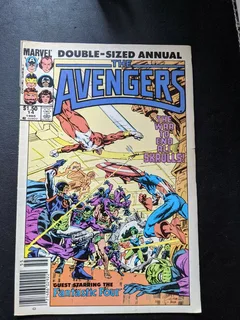
A Canadian price variant, or CPV, is a newsstand copy of a comic printed with a higher Canadian cover price and otherwise identical to the US newsstand copy. Most are Marvel and DC comics from the 1980s. In the 1980s the Canadian dollar fell against the US dollar, and comics sold at Canadian newsstands needed a higher price to make up for it. So for several years Marvel and DC printed a separate batch of newsstand copies with only the Canadian price on the cover: typically 75¢ when the US price was 60¢.
Fewer of them were printed, fewer survived, and collectors now hunt them as variants in their own right. See the Canadian price variants in stock.
The years that count
- Marvel: cover dates from October 1982 to August 1986.
- DC: cover dates from October 1982 to September 1988.
These are the windows the CPV Price Guide uses for Marvel and DC. Other publishers printed CPVs on their own dates; Archie kept printing them into the mid-1990s, including its Sonic and Teenage Mutant Ninja Turtles Adventures titles. Outside these windows, a Marvel or DC cover with a Canadian price usually means something else (see below).
How to spot one
- Check the cover price. A CPV shows a single price higher than the US price of the day: 75¢ in place of 60¢, 95¢ in place of 75¢, and so on.
- Check that it’s a newsstand copy. CPVs were newsstand editions, so they carry a UPC barcode box on the cover. A direct-market copy, sold in comic shops, has a different box, often a character picture or logo, and was never a CPV.
- Don’t rely on the word “CAN”. Some early DC CPVs print “Canadian” under the price, but most CPVs show only the price. A large US price with a smaller “CAN.” price under it means a direct-market copy or a later dual-price cover, not a CPV.
- Check the cover date against the years above.
- On a graded copy, read the label. CGC has labelled these “Canadian Price Variant” since May 2019, with the cover price on the label; older labels say “Canadian Edition”.
What isn’t a CPV
- Dual-price covers. After the last CPVs (August 1986 cover dates at Marvel, September 1988 at DC), newsstand copies carried both prices, as direct-market copies already did. A copy that shows both prices is not a price variant.
- Direct-market copies of the same issue, even when bought in Canada.
- Reprints and facsimiles, whatever price they show.
Why collectors pay more
- Only a small share of each issue’s newsstand run was printed with the Canadian price, and newsstand copies were often handled roughly on racks.
- Clean, high-grade CPVs are scarce: CGC census data puts most at about 2% of an issue’s graded copies (CPV Price Guide).
- For Canadian collectors there’s a second reason: they’re the copies that were actually on sale here.
The CPV Price Guide tracks prices and print-run research. If you want to value a CPV, it’s the reference to use. We don’t publish prices beyond our own listings.
Buying CPVs at Republic Comics
Every CPV we sell is marked “Canadian Price Variant” or “CPV” in its title and photographed front and back, so you can check the price box and the barcode yourself. Most come from the Bronze and Copper Age, 1982 to 1988. See all Canadian price variants in stock, or how we describe condition in the grading guide.