
Comic Book Grading Guide: Grades Explained
How comic book grades work: the 10-point scale from 0.5 to 10, what each grade means, what lowers a grade, and how Republic Comics grades every copy.
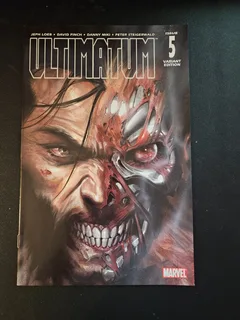
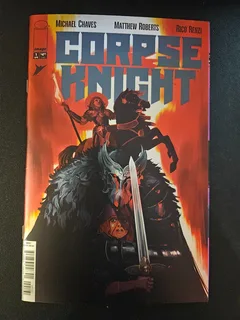
Our five grades on the 10‑point scale
Each listing gives one of these grade words, with a real copy from stock at each grade. Point at a grade to see where it sits on the scale.
-
Low Grade
About 0.5–4.0 · PR to VG
Heavily worn: creases, tears or loose pages are possible. A reading copy.
None in stock right now.
-
Mid Grade
About 4.5–7.0 · VG+ to FN/VF
Read and enjoyed: visible wear such as creases, spine stress or rounded corners, still complete.
 Captain Marvel #8 (1968)
See all 5, newest first
-
Higher Grade
About 7.5–9.0 · VF to VF/NM
Very fine: an attractive copy with light wear, such as minor spine stress or a small crease.
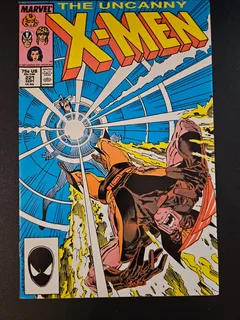 Uncanny X-Men #221 (1987)
See all 301, newest first
-
Hi Grade
About 9.0–9.4 · VF/NM to NM
Near mint: a few tiny flaws at most, such as a small spine stress or a touch of corner wear.
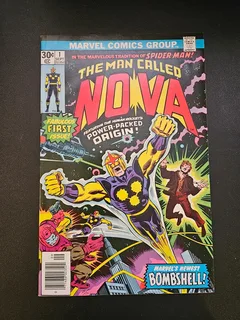 The Man Called Nova #1 (1976)
See all 933, newest first
-
Super Hi Grade
About 9.6 and up · NM+ or better
Nearly perfect: only the smallest flaws, if any.
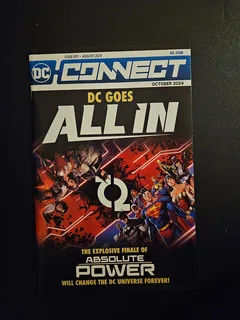 DC Connect #51 (2024)
See all 13, newest first
Slabbed comics show their grader’s grade instead, such as CGC 9.8. A few older listings say “Great Shape” or “See pictures”; their photos show the copy.
A comic’s grade describes its condition: how close the copy is to the day it was printed. Collectors use a 10-point scale, from 0.5 for a copy that’s barely holding together to 10.0 for a flawless one. Each listing on Republic Comics gives one of our five grade words, and the scale above shows where each word sits, with a real copy from stock at every grade.
The 10-point scale, grade by grade
These are the standard grades used by collectors and grading companies such as CGC, CBCS and PGX, with the letter names you’ll see on listings and slabs. The last column is the grade word we use for each.
| Grade | Name | Our words |
|---|---|---|
| 10.0 | GM Gem Mint | Super Hi Grade |
| 9.9 | MT Mint | Super Hi Grade |
| 9.8 | NM/M Near Mint/Mint | Super Hi Grade |
| 9.6 | NM+ Near Mint+ | Super Hi Grade |
| 9.4 | NM Near Mint | Hi Grade |
| 9.2 | NM- Near Mint- | Hi Grade |
| 9.0 | VF/NM Very Fine/Near Mint | Hi Grade / Higher Grade |
| 8.5 | VF+ Very Fine+ | Higher Grade |
| 8.0 | VF Very Fine | Higher Grade |
| 7.5 | VF- Very Fine- | Higher Grade |
| 7.0 | FN/VF Fine/Very Fine | Mid Grade |
| 6.5 | FN+ Fine+ | Mid Grade |
| 6.0 | FN Fine | Mid Grade |
| 5.5 | FN- Fine- | Mid Grade |
| 5.0 | VG/FN Very Good/Fine | Mid Grade |
| 4.5 | VG+ Very Good+ | Mid Grade |
| 4.0 | VG Very Good | Low Grade |
| 3.5 | VG- Very Good- | Low Grade |
| 3.0 | GD/VG Good/Very Good | Low Grade |
| 2.5 | GD+ Good+ | Low Grade |
| 2.0 | GD Good | Low Grade |
| 1.8 | GD- Good- | Low Grade |
| 1.5 | FR/GD Fair/Good | Low Grade |
| 1.0 | FR Fair | Low Grade |
| 0.5 | PR Poor | Low Grade |
Hi Grade or Higher Grade? Hi Grade (about 9.0 to 9.4) is the better of the two. Higher Grade (about 7.5 to 9.0) is a step below it: a very fine copy with light wear. The names come from our eBay listings, so we kept them, and every listing shows the range next to the words.
What lowers a grade
A grade comes from the copy’s worst problems, not its best side. These are the defects that move a comic down the scale, roughly from smallest to largest.
- Spine stress: short creases along the spine, usually near the staples, from the comic being opened. Small ones that don’t break the cover’s colour cost little.
- Corner wear: corners that are soft, rounded or slightly bent instead of sharp.
- Colour-breaking creases: folds that crack the ink and show white paper underneath. They lower a grade more than a bend that leaves the colour whole.
- Spine roll: the spine curling toward the back cover, from folding the comic back while reading it.
- Fading: colour lost to light, often in a strip along the spine or one edge.
- Writing and stamps: names, prices or dates written on the cover. Newsstand copies sometimes carry a pencilled arrival date.
- Staple rust and stains: rust on the staples can mark the pages around them; water and other stains show on the cover or inside.
- Tears, chips and missing pieces: torn edges, small pieces gone from the cover, or a loose cover or centrefold. These belong to the lowest grades.
Page colour also matters on older comics. Paper yellows with age, from white to off-white, cream and tan, and very old paper can become brittle.
Raw and slabbed comics
A raw comic is one you can take out of its bag and hold. Its grade is the seller’s estimate, which is why every one of our listings shows photos of the actual copy.
A slabbed comic has been graded by a grading company and sealed in a hard plastic case with a label showing the grade, such as CGC 9.8. Our slabbed comics show that grader’s number instead of our grade words.
To have a comic graded from Canada, you send it to one of the grading companies or to a dealer who submits for collectors; each company lists its current submission options on its website.
How we grade
We grade every comic ourselves from the book in hand and give it one of our five grade words. We photograph the actual copy, so you can check the spine, corners and colour for yourself, and we note the defects we notice in the listing.
Grading by eye is an estimate, and two collectors can differ by a step. If a comic arrives and isn’t what its photos and grade showed, you can return it within 30 days.
Questions
Is 8.5 a good grade for a comic?
Yes. 8.5 (VF+) is a very fine copy with light wear, in our Higher Grade. For older comics that’s a nice copy; for recent ones, many collectors look for 9.4 or higher.
What does a 7.0 comic look like?
A 7.0 (FN/VF) has been read and handled: a few small creases or some spine stress, corners not quite sharp, but the cover is bright and the book is complete. It sits at the top of our Mid Grade.
Are your grades certified?
No. Our grade words are our estimates of raw copies. Certified grades only come with slabbed comics, which show the grading company’s number.
What do “Great Shape” and “See pictures” mean?
A few older listings use these words instead of a grade. The photos show the copy, and you can ask us about any comic before you buy.