The Best Spider-Man Comics to Read
The Spider-Man stories most often recommended, in order, with issue numbers, years and creators, plus the Spider-Man key issues we have in stock.

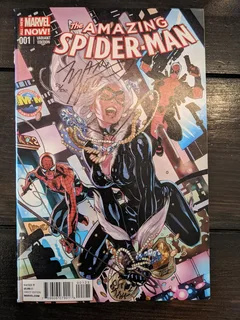
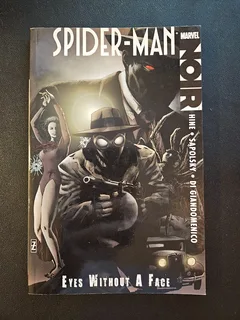
The best Spider-Man comics to read start with Stan Lee and Steve Ditko’s original run and run through Kraven’s Last Hunt, Ultimate Spider-Man and the Spider-Verse. These are the stories collectors and critics recommend most, in the order they came out, with the issues they’re in, so you can read them or collect the originals. Spider-Man first appeared in Amazing Fantasy #15 (August 1962), created by Stan Lee and Steve Ditko.
The essential Spider-Man stories
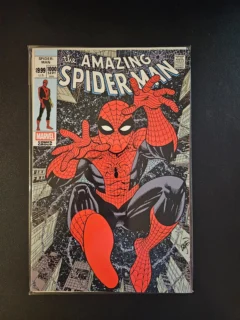
The Lee and Ditko years (The Amazing Spider-Man #1–38, 1963–1966)
Where it all starts: Peter Parker’s school and money troubles alongside the first appearances of the Vulture, Doctor Octopus, the Sandman, the Lizard, Electro, Mysterio and the Green Goblin. “If This Be My Destiny” (#31–33) is the high point.
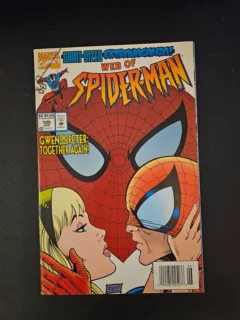
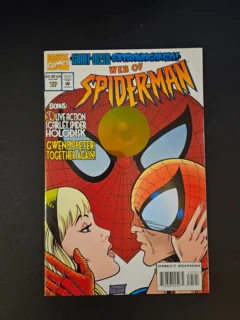
The Night Gwen Stacy Died (The Amazing Spider-Man #121–122, 1973)
Gerry Conway and Gil Kane’s two-parter, in which the Green Goblin kills Gwen Stacy. It’s often named as the moment superhero comics grew up.
The Kid Who Collects Spider-Man (The Amazing Spider-Man #248, 1984)
Roger Stern’s short story about Spider-Man visiting his biggest fan, often named among the best single-issue Spider-Man stories.
The Death of Jean DeWolff (Peter Parker, The Spectacular Spider-Man #107–110, 1985–86)
Peter David and Rich Buckler’s dark murder mystery, pitting Spider-Man and Daredevil against the Sin-Eater.
Kraven’s Last Hunt (1987)
J.M. DeMatteis and Mike Zeck’s six-part story across Web of Spider-Man #31–32, The Amazing Spider-Man #293–294 and The Spectacular Spider-Man #131–132. Kraven buries Spider-Man alive and takes his place.
Venom arrives (The Amazing Spider-Man #300, 1988)
David Michelinie and Todd McFarlane give Venom his first full appearance, and the issue is a key collectors still look for.
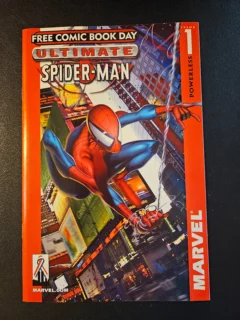
Ultimate Spider-Man (2000)
Brian Michael Bendis and Mark Bagley retell Peter Parker’s story from the beginning for a modern reader. It’s the most common starting point recommended to new readers.
Spider-Man: Blue (2002)
Jeph Loeb and Tim Sale’s look back at Peter’s romance with Gwen Stacy, told as a letter.
Miles Morales (Ultimate Fallout #4, 2011)
Brian Michael Bendis and Sara Pichelli introduce Miles Morales, who becomes the Ultimate universe’s Spider-Man and later the star of the Spider-Verse films.
Spider-Verse (2014–2015)
Dan Slott’s event gathers Spider-Men and Spider-Women from across the multiverse, including the first appearance of Spider-Gwen in Edge of Spider-Verse #2.
Spider-Man key issues in stock
These are the Spider-Man comics in stock that collectors look for as key issues: first appearances, origins and major events. Every copy is photographed as it is, and its grade is on its listing.
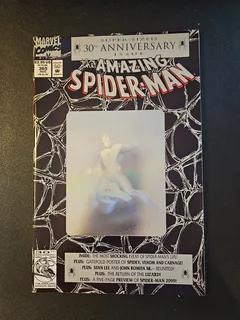
Amazing Spider-Man #365 (1992)
1st appearance of Spider-Man 2099
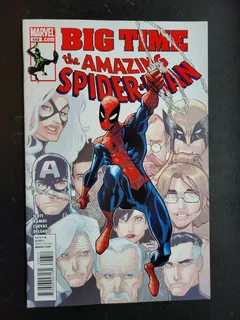
Amazing Spider-Man #648 (2011)
1st appearance of the Stealth Suit
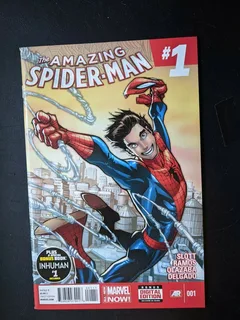
Amazing Spider-Man #1 (2014)
1st appearance of Cindy Moon (Silk)
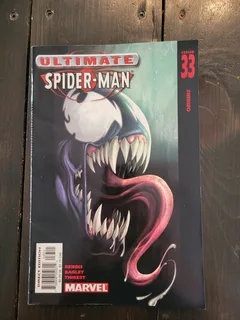
Ultimate Spider-Man #33, 37, 38 (2003)
1st Ultimate Venom
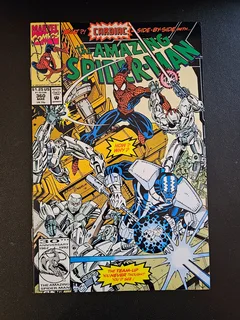
Amazing Spider-Man #360 (1992)
1st appearance of Cardiac, 1st cameo of Carnage
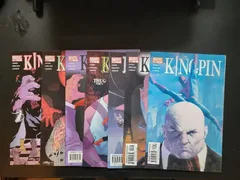
Kingpin #1-7 (2003)
1st solo series
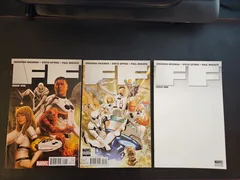
FF #1 (2011)
1st appearance of the Future Foundation
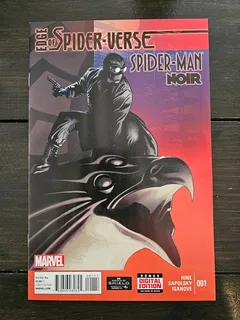
Edge of Spider-Verse #1 (2014)
1st Spider-UK
Where to start collecting
Most collectors pick one run and work through it issue by issue. Our Amazing Spider-Man (1963) page lists every issue we have from the original series in number order, and the Spider-Man comics page has everything else, from Web of Spider-Man to the Ultimate line. Not sure what a grade means? See the grading guide.